
When it comes to organising group travel, cost is often the deciding factor, but it’s rarely as straightforward as comparing two price tags. The real question isn’t just what costs less today, but what delivers better value over time.
For businesses, schools, and organisations across the UK, the choice often comes down to long-term transport contracts versus ad-hoc coach hire. Both serve different purposes, and each can be cost-effective in the right circumstances.
So, which one actually saves you more money? The answer depends on how, when, and why you travel.
What’s the Difference Between Long-Term and Ad-Hoc Transport?
Before comparing costs, it helps to understand how these two models work in practice.
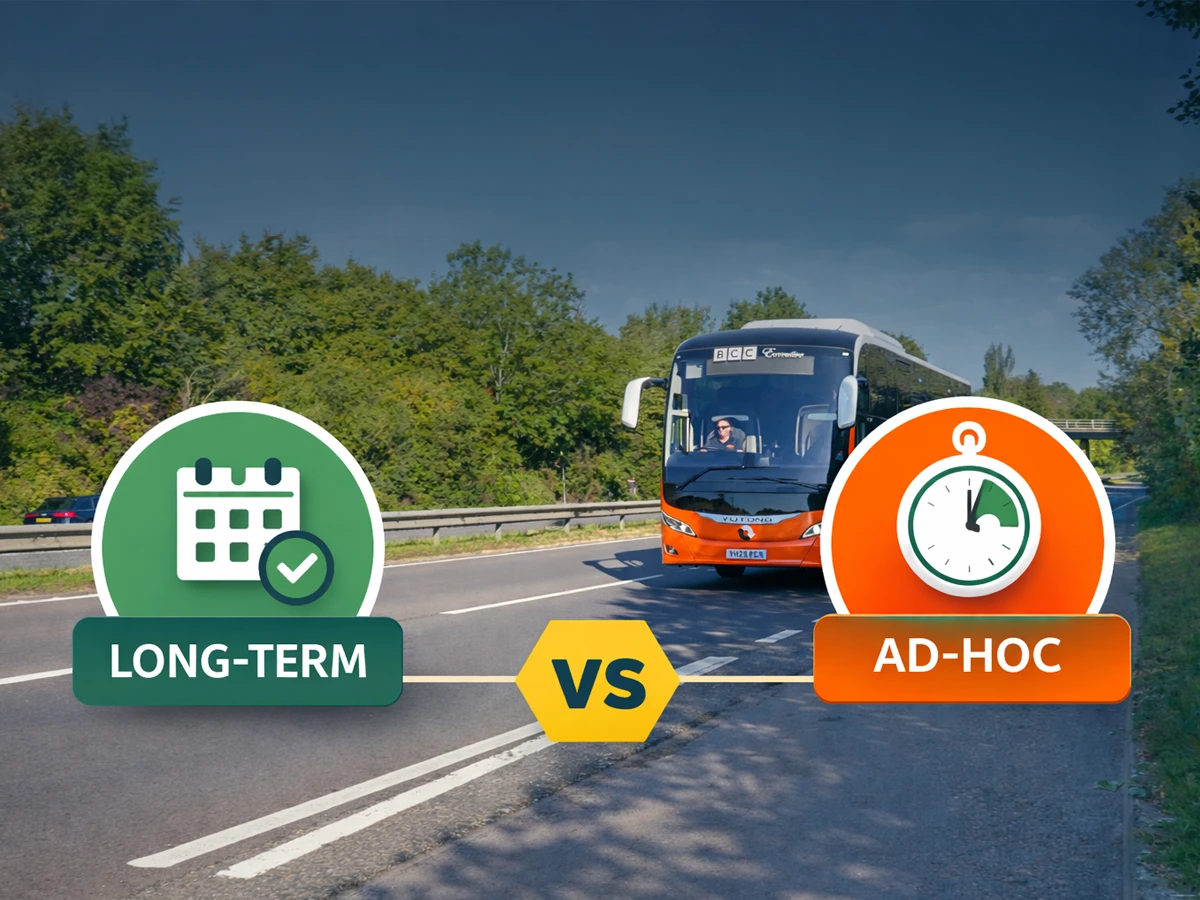
Long-term transport is built around consistency. It’s typically arranged as a contract over a set period, providing scheduled journeys for things like staff transport, school routes, or ongoing project work. With providers such as Barton Coach Company, these contracts are tailored to match exact operational needs, ensuring everything runs like clockwork.
Ad-hoc transport, on the other hand, is all about flexibility. It’s the option most people are familiar with: booking a coach or minibus for a one-off journey, whether that’s an airport transfer, a corporate event, or a day trip.
Neither is inherently “better”; they simply solve different problems.
The Real Meaning of Cost-Effectiveness in Transport
Cost-effectiveness isn’t just about the upfront quote. It’s influenced by frequency, planning, reliability, and even the hidden costs that don’t always appear on an invoice.
A journey that looks cheaper on paper can quickly become more expensive when repeated bookings, time spent organising transport, or peak-season price increases come into play.
This is where the distinction between long-term and ad-hoc transport becomes clearer.
When Long-Term Transport Starts Saving You Money
If your organisation regularly relies on transport, long-term arrangements tend to become more cost-effective over time.
With consistent usage, providers can optimise routes, allocate vehicles efficiently, and reduce downtime. These efficiencies are often reflected in pricing, resulting in a lower cost per journey compared to repeated one-off bookings.
Transport insights highlight that organisations with frequent travel needs, such as daily or weekly journeys, can achieve noticeable cost reductions through contract-based transport, particularly when routes and schedules are predictable.
There’s also the benefit of financial stability. Instead of dealing with fluctuating prices, long-term contracts typically offer agreed rates, making budgeting far more straightforward.
And then there’s the operational side. When transport is pre-arranged, there’s no need to repeatedly source quotes, confirm availability, or manage last-minute changes. Over time, that administrative saving adds up quietly but significantly.
If your team, students, or operations rely on transport day in and day out, a long-term solution often pays for itself in more ways than one.
Suggested read: Transport Contracts in Bedfordshire: A Reliable Solution for Businesses
Why Ad-Hoc Transport Still Makes Financial Sense
Despite the advantages of long-term contracts, ad-hoc transport remains the most practical option in many situations.
If your travel needs are occasional or unpredictable, committing to a contract could mean paying for services you don’t fully use. In these cases, flexibility becomes more valuable than fixed pricing.
Ad-hoc hire allows you to book transport exactly when you need it, nothing more, nothing less. For events, seasonal activities, or one-off journeys, this approach ensures you’re only paying for what you actually use.
However, it’s worth noting that prices can vary. Factors such as fuel costs, demand, and timing all influence rates. Booking transport during peak periods, such as summer events or the festive season, can be noticeably more expensive than during quieter times of the year.
Still, for organisations without regular transport requirements, ad-hoc hire avoids unnecessary commitments and keeps spending aligned with actual usage.
If your schedule changes frequently or your travel needs are occasional, flexibility is often the more cost-effective route.
The Hidden Costs That Influence Your Decision
Some of the most important cost factors aren’t always obvious at first glance.
With ad-hoc transport, repeated bookings can increase the administrative workload. There’s also the risk of limited availability during busy periods, which can result in higher prices or last-minute compromises.
Long-term transport, while more structured, does require commitment. If your needs change significantly, you may not fully utilise the service you’ve arranged.
The key is alignment. The most cost-effective option is the one that closely matches how often and how predictably you travel.
Reliability, Availability, and Their Impact on Cost
Reliability might not seem like a financial factor at first, but it plays a bigger role than many expect.
With long-term transport, vehicles and drivers are scheduled in advance, ensuring consistent service. This is particularly important for schools, corporate staff transport, and time-sensitive operations where delays can have wider consequences.
Ad-hoc bookings, while flexible, are subject to availability. During high-demand periods, securing the right vehicle at the right time can be more challenging and sometimes more expensive.
In practical terms, reliability reduces risk. And reduced risk often translates into avoided costs.
A Smarter Approach: Combining Both Models
For many organisations, the most cost-effective solution isn’t choosing one over the other; it’s using both strategically.
For example, a business might rely on long-term transport for daily staff travel while using ad-hoc hire for events or occasional trips. This hybrid approach balances cost efficiency with flexibility, ensuring you’re never overcommitted or underprepared.
Working with an experienced provider like Barton Coach Company makes this even easier, as services can be tailored to fit around your exact requirements.
Sustainability and Efficiency: A Growing Consideration
Cost-effectiveness today is increasingly linked with sustainability.
Since 2023, UK transport strategies have placed greater emphasis on reducing emissions through better route planning and vehicle utilisation. Long-term transport naturally supports this by consolidating journeys and minimising unnecessary mileage.
While this may not always show up immediately in financial terms, improved efficiency often leads to long-term savings, both economic and environmental.
So, Which Option Is More Cost-Effective?
The answer depends entirely on your needs.
If your organisation depends on regular, predictable transport, long-term arrangements typically offer better value through reduced per-journey costs, stable pricing, and operational efficiency.
If your travel is occasional or variable, ad-hoc hire ensures you only pay for what you need, when you need it.
And if you fall somewhere in between, a combination of both may deliver the best results.
Frequently Asked Questions
Is long-term transport always cheaper?
Not always. It becomes more cost-effective when transport is required regularly over time.
Can I use both long-term and ad-hoc transport?
Yes, many organisations combine both to balance flexibility and cost efficiency.
Does ad-hoc transport cost more during busy periods?
It can. Prices may increase during peak seasons or high-demand events.
Who benefits most from long-term transport?
Schools, businesses, and organisations with consistent travel needs benefit the most.
How can I determine the best option for my needs?
Assess how often you travel, how predictable your schedule is, and whether flexibility or cost stability matters more.
Get a Quick Quote for Cost-Effective Transport
Whether you’re exploring long-term transport solutions or need flexible ad-hoc hire, finding the most cost-effective option starts with understanding your exact requirements.
Barton Coach Company makes this simple. Their experienced team can quickly assess your needs and recommend the best approach, helping you save money without compromising on reliability or service quality. If you’re ready to take the next step, get in touch today for a quick, no-obligation quote. Speak directly with our team to find a smarter, more efficient way to manage your transport.